Preoperative Embolization for Kidney Tumor: How It Helps Before Surgery
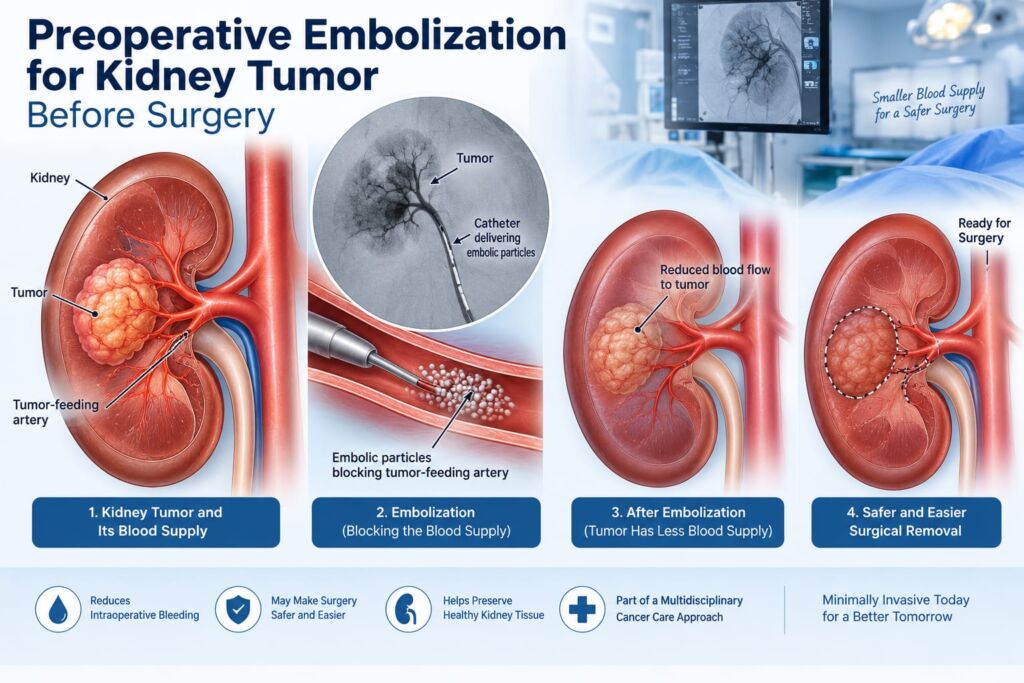
When a kidney tumor requires surgery, controlling blood flow to the tumor can sometimes be an important part of treatment planning. Preoperative embolization kidney tumor is a minimally invasive procedure that may be considered before selected kidney tumor surgeries to reduce blood flow to the tumor and potentially make the surgical procedure more manageable.
However, preoperative embolization is not necessary for every patient undergoing kidney tumor surgery. The decision depends on factors such as tumor size, location, blood supply, vascular involvement, surgical approach, and the patient’s overall condition.
For patients in Hyderabad and Chennai who have been advised to undergo complex kidney tumor surgery, understanding when embolization may be useful can help them have a more informed discussion with their urologist and interventional radiologist.
What Is Preoperative Embolization for a Kidney Tumor?
Preoperative embolization kidney tumor is an image-guided procedure performed before selected kidney surgeries. During the procedure, an interventional radiologist guides a thin catheter through a blood vessel to the arteries supplying the kidney tumor.
Once the tumor-feeding vessels are identified, an embolic material is delivered through the catheter to reduce or block blood flow to selected parts of the tumor.
The purpose is not to replace cancer surgery. Instead, in carefully selected cases, embolization may be used as an additional step before surgery.
The National Cancer Institute lists preoperative embolization followed by radical nephrectomy among treatment approaches that may be used for certain stage III renal cell cancers. It also notes that arterial embolization may be used before nephrectomy to reduce blood loss in selected cases.
Why Is Embolization Considered Before Kidney Tumor Surgery?
Kidney tumors can have a substantial blood supply. Some tumors, particularly larger or hypervascular tumors, may have complex feeding vessels that can make surgery more challenging.
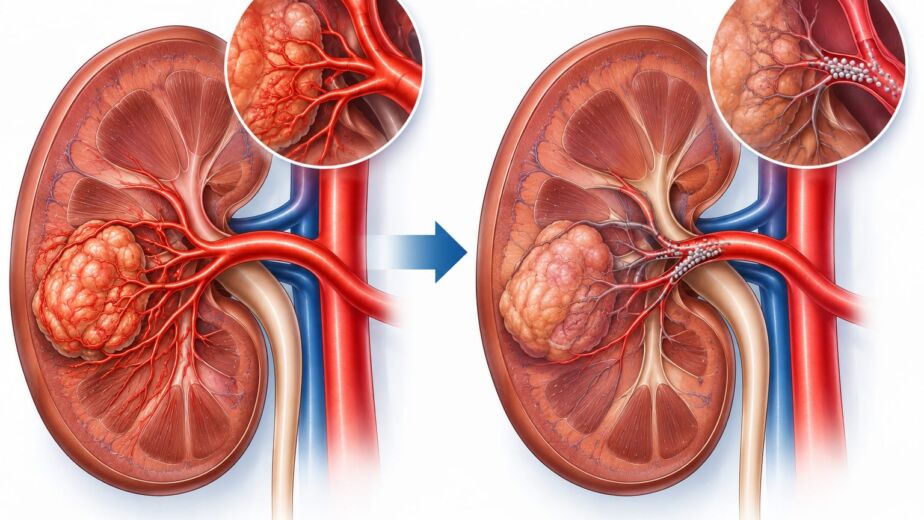
In selected patients, embolization before kidney surgery may reduce blood flow to the targeted tumor and its feeding vessels before the operation.
Potential reasons for considering the procedure include:
- Large or highly vascular kidney tumors
- Complex tumors with difficult vascular anatomy
- Locally advanced tumors
- Tumors involving or close to major blood vessels
- Selected cases where reducing tumor blood flow may assist surgical planning
A prospective study of patients undergoing preoperative super-selective embolization for T1 renal tumors reported lower blood loss compared with an on-clamp laparoscopic partial nephrectomy group, although embolization itself also carries procedural risks and requires appropriate patient selection.
Can Preoperative Embolization Reduce Bleeding During Kidney Surgery?
One of the main reasons embolization may be considered is to help reduce bleeding during kidney surgery.
By selectively reducing blood flow through tumor-feeding arteries before surgery, the surgical team may encounter less blood flow from those targeted vessels during tumor removal.
Research in selected complex renal tumors has reported lower blood loss following immediate preoperative renal artery embolization. In one study involving locally advanced tumors and inferior vena cava thrombus, embolization was associated with lower mean operative blood loss compared with the control group.
However, this does not mean embolization eliminates bleeding or guarantees a safer operation. The amount of blood loss depends on many factors, including tumor size, vascular involvement, surgical technique and individual anatomy.
Therefore, kidney tumor surgery should be planned by the appropriate multidisciplinary team, with embolization considered only when its potential benefits outweigh its risks.
How Is Kidney Tumor Embolization Performed?
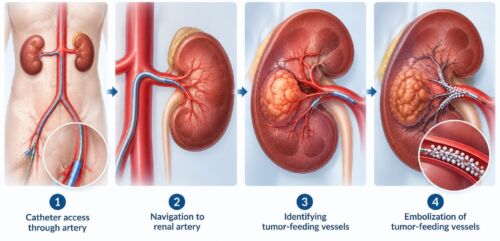
The procedure is performed using imaging guidance rather than through a large surgical incision.
1. Vascular access
A small catheter is introduced through an artery, commonly through the groin or wrist depending on the patient’s anatomy and the interventional radiologist’s approach.
2. Imaging of the kidney arteries
Contrast imaging is used to identify the renal arteries and the blood vessels supplying the tumor.
3. Selective catheterization
The interventional radiologist guides the catheter toward the specific vessels supplying the tumor.
4. Embolization
An appropriate embolic material is delivered through the catheter to reduce or block blood flow to the selected vessels.
5. Confirmation
Imaging is performed again to confirm that the intended blood vessels have been adequately treated.
The patient can then proceed to the planned surgical treatment according to the multidisciplinary team’s schedule.
Is Preoperative Embolization Required for Every Kidney Tumor?
No.
This is an important point for patients researching preoperative embolization kidney tumor procedures.
Current European Association of Urology guidance states that tumor embolization has no established benefit before routine nephrectomy and does not recommend routine use. However, embolization has specific roles in selected situations, including symptom control in patients who are not suitable for surgery.
At the same time, the NCI recognizes preoperative embolization followed by nephrectomy as an option in selected advanced renal cell cancer settings.
This means the procedure should be individualized rather than presented as a standard step for every kidney tumor.
What Are the Potential Benefits?
Depending on the patient’s anatomy and tumor characteristics, potential benefits may include:
- Reduced blood flow to selected tumor-feeding vessels
- Potential reduction in operative blood loss
- Assistance with surgical planning in complex tumors
- A minimally invasive approach to controlling selected tumor vessels
- Potentially easier identification and management of vascular structures during surgery
The exact benefit varies from patient to patient. Kidney cancer surgery risk is influenced by tumor stage, size, location, vascular involvement, kidney function and the type of surgery required.
Are There Risks With Embolization?
Like any medical procedure, embolization has potential risks.
These may include:
- Pain or discomfort after the procedure
- Fever or post-embolization symptoms
- Bleeding or bruising at the catheter access site
- Infection
- Unintended embolization of non-target vessels
- Blood vessel injury
- Changes in kidney function in selected circumstances
- Rare complications related to the embolic material
A study of immediate preoperative renal artery embolization for complex renal tumors reported a high technical success rate and no severe complications in its study population, but post-embolization syndrome occurred in a small proportion of patients.
The potential risks therefore need to be discussed individually before treatment.
Does Embolization Replace Kidney Tumor Surgery?
Usually, no.
For patients who are candidates for curative surgery, embolization may be an adjunct rather than a replacement for surgery.
The appropriate operation may include partial nephrectomy or radical nephrectomy depending on the tumor and the patient’s circumstances. The NCI notes that surgery remains an important treatment for renal cell cancer, with partial nephrectomy used in appropriately selected patients to remove the tumor while preserving kidney tissue.
The role of kidney tumor embolization should therefore be determined as part of the overall treatment plan rather than viewed as an alternative to definitive cancer treatment.
Who May Need Preoperative Embolization?
The decision is usually based on detailed imaging and multidisciplinary assessment.
A patient may be considered for preoperative embolization kidney tumor when the tumor has characteristics that could make vascular control during surgery particularly challenging.
Factors that may be evaluated include:
- Tumor size
- Tumor vascularity
- Tumor location
- Renal artery anatomy
- Involvement of major vessels
- Presence of venous tumor thrombus
- Planned surgical approach
- Kidney function
- Overall health
For complex cases, coordination between an interventional radiologist and urologic surgeon is particularly important.
What Should Patients Ask Before Treatment?
If you have been advised to undergo embolization before kidney tumor surgery, consider asking:
- Why is embolization being recommended in my case?
- Which blood vessels are supplying the tumor?
- What is the goal of embolization?
- Could embolization reduce expected blood loss?
- What are the alternatives?
- When will surgery be performed after embolization?
- What complications should I watch for?
- How will my kidney function be monitored?
These questions can help you understand whether the procedure is appropriate for your specific situation.
Preoperative Embolization for Kidney Tumor in Hyderabad and Chennai
Patients diagnosed with a kidney tumor in Hyderabad or Chennai may be referred for an interventional radiology assessment when their treatment team believes vascular intervention could be useful before surgery.
Because every kidney tumor has different anatomy and blood supply, treatment should be based on individual imaging rather than a standard approach.
If you have been advised to undergo kidney tumor surgery and want to understand whether embolization may have a role in your treatment plan, an interventional radiology consultation can help evaluate the available options.
Frequently Asked Questions
1. What is preoperative embolization for a kidney tumor?
It is an image-guided procedure used in selected patients before kidney surgery to reduce blood flow through specific tumor-feeding blood vessels.
2. Does embolization prevent bleeding during kidney surgery?
It may help reduce blood flow and potentially reduce operative blood loss in selected cases, but it cannot guarantee that bleeding will not occur.
3. Is embolization required before every kidney tumor surgery?
No. Current guidelines do not recommend routine embolization before every nephrectomy. Its use depends on the individual tumor and surgical circumstances.
4. Does embolization cure kidney cancer?
Preoperative embolization is generally an adjunct to planned treatment rather than a replacement for definitive cancer surgery.
5. Is kidney tumor embolization a major surgery?
No. It is performed as a minimally invasive, catheter-based procedure using imaging guidance.
6. Who decides whether embolization is appropriate?
The decision should be made after reviewing the patient’s imaging, tumor characteristics, kidney function and planned surgery, ideally through coordination between the treating specialists.

.jpg)
.png)
Comments
Post a Comment